
Are There Alligators on Hilton Head Island
Alligators have lived on Hilton Head Island for millions of years. They are found in the island’s freshwater areas like ponds and marshes. Sightings of alligators on Hilton Head vary by season, but they’re most common in spring and fall.
In winter, alligators slow down and stay hidden. But when April comes, they emerge again. They can stay underwater for over an hour. This affects the island’s ecosystem.
Hilton Head Island is home to about 1,200 alligators. They help control invasive species and keep the nutrient cycles balanced. It’s important to respect these reptiles and keep a safe distance.
Visitors should never feed alligators. By understanding their behavior and habitats, we can all enjoy Hilton Head safely.
Alligators on Hilton Head: The Island’s Ancient Residents
Alligators have lived on Hilton Head for thousands of years. They are key to the island’s wetlands and forests. Knowing about them helps everyone live safely with these ancient creatures.
How Many Alligators Call Hilton Head Home?
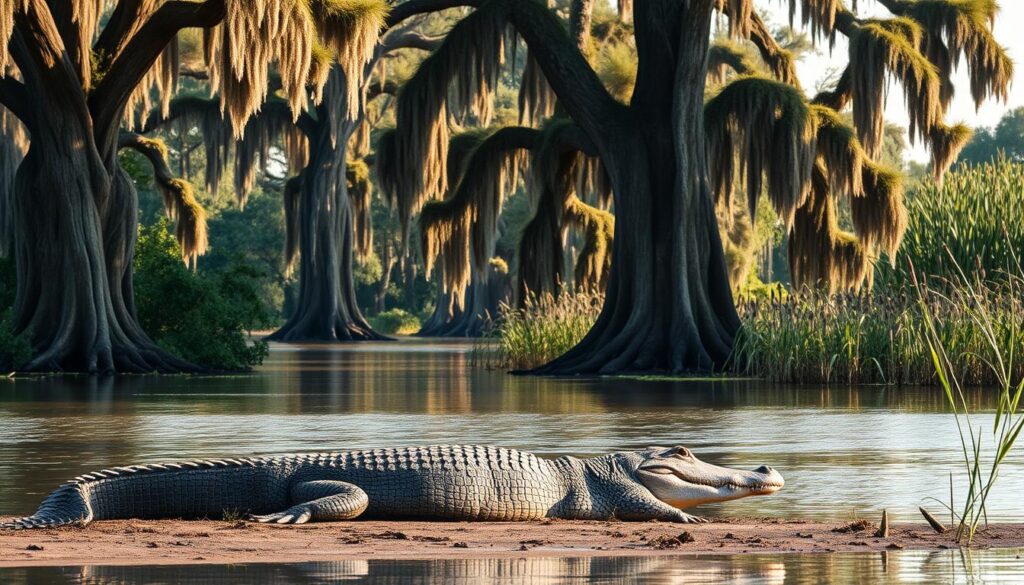
Alligators on Hilton Head come in different sizes. Females are about 8 feet long, and males can be up to 11 feet. South Carolina has over 100,000 alligators, with Hilton Head having hundreds. They live in freshwater areas, keeping the ecosystem balanced.
Where You’re Most Likely to Spot an Alligator
- Marshes and Lagoons: Places like Skull Creek and Harbour Town Golf Links are good spots.
- Residential Water Features: Ponds in Sun City Hilton Head might have alligators.
- Preserved Wetlands: The Pinckney Island National Wildlife Refuge is a great place to see them.
Alligators mostly stay away from people. hilton head alligator sightings are rare but can happen near water.
Seasonal Alligator Activity on the Island
In winter, alligators are less active. They go into a state of semi-hibernation. In spring and early summer, they are more active during mating season. By mid-summer, they hide in the water to avoid the heat. Always check local advisories for alligator facts hilton head updates.
Recent data shows Hilton Head’s hilton head reptiles population is stable. Being aware helps both wildlife and visitors live together well.
Understanding Alligator Habitats Around the Island
Alligators live in many places on Hilton Head. They like freshwater spots like lakes and ponds. But they also go to brackish and saltwater areas by the sea. They can even be found in golf course ponds.

The Sea Pines Forest Preserve is a key place for them. It has five lakes where alligators are active. These areas give them places to nest and hunt.
Alligators dig holes that help other animals when it’s dry. This shows how connected Hilton Head’s ecosystems are.
- Preferred spots: freshwater lagoons, marshes, and preserved wetlands
- Size range: 9 inches (newborns) to 13 feet (adult males)
- Activity peaks: dawn and dusk, when they hunt fish, birds, and turtles
Alligators play a big role in their environment. They move based on the weather and when they can find food. In winter, they slow down but might come out on warm days.
People should keep at least 60 feet away from them. Never go near water at night. It’s illegal and dangerous to feed or bother them.
Efforts to protect them have helped their numbers grow. But they need healthy places to live. By respecting their homes, we help keep Hilton Head’s nature in balance. Always follow SCDNR’s safety tips when exploring.
Staying Safe During Your Hilton Head Vacation
Enjoying Hilton Head’s natural beauty means respecting its wildlife. Alligators on Hilton Head are part of the ecosystem. A few simple steps ensure your visit stays safe and memorable.
Essential Alligator Safety Tips for Visitors
Follow these guidelines to minimize risks around hilton head wildlife:
- Stay at least 60 feet away from alligators—this is the legal requirement during summer.
- Never feed or approach nesting areas. Feeding is illegal and endangers both humans and alligators.
- Keep pets on leashes near water. A 2023 incident near a lagoon highlighted risks when dogs were walked unsupervised.
- Avoid swimming in secluded areas. Stick to designated zones like Coligny Beach.
What to Do If You Encounter an Alligator
If you spot an alligator:
- Back away slowly. Do not turn your back—maintain eye contact if possible.
- Contact the S.C. Department of Natural Resources at 1-800-922-5431 if the animal is aggressive.
- Remember: Only six alligator-related deaths occurred in SC in the last decade, but vigilance saves lives.
Alligators typically avoid humans. Most encounters resolve peacefully when you give them space.
Teaching Children About Wildlife Safety
Teach kids to:
- Stay 60 feet from alligators and never throw objects at them.
- Avoid wading in shallow waters during dawn/dusk when alligators are active.
Remind them that baby alligators mean mothers are nearby. Use free parks like Pinckney Island as safe learning spots.
During summer, pets must stay off beaches between 10 AM-5 PM. This reduces accidental encounters near lagoons and golf courses.
Best Locations for Responsible Alligator Viewing
Exploring best places to see alligators on hilton head means choosing guided tours. These tours mix learning with caring for nature. H2O Alligator and Nature Tours offer safe, close-up views of alligators. They take you to the Sea Pines Forest Preserve’s five lakes, where electric boats move quietly.
- Sea Pines Forest Preserve: Explore 600 acres of wetlands on 25-foot Duffy cruisers. Tours visit Lake Thomas, Wood Duck Lake, and Lake Mary, where alligators live in untouched habitats.
- Sunset Beach Access Points: Find basking alligators near Fish Haul Creek or Mitchelville Beach at dawn or dusk.
- Marsh Boardwalk Trails: Spot reptiles with binoculars along the 60+ miles of island paths, near freshwater ponds.
Guided tours highlight alligators’ seasonal behaviors. Summer tours show swimming, while spring/fall tours show basking. All tours keep a safe distance, protecting both guests and animals. H2O has eight years of experience, sharing knowledge on alligator ecology and wildlife protection.
Always follow “leave no trace” rules—take out your trash and don’t use artificial lights near nests. Stay at places like Sunset Rentals for easy access to viewing spots. But, always observe responsibly.
Preserving Hilton Head’s Natural Beauty and Wildlife
Alligators are key to Hilton Head’s ecosystem balance. They help shape wetlands and waterways, making homes for birds, fish, and insects. This keeps the island’s salt marshes and forests healthy, supporting over 250 bird species and many others.
The Hilton Head Island Land Trust works hard to protect these areas. They have the 137-acre Whooping Crane Conservancy and the 605-acre Sea Pines Forest Preserve. Visitors can join hilton head nature tours to learn about alligators and their habitats. Places like the Audubon Newhall Preserve and Pinckney Island National Wildlife Refuge also show how conservation works.
Protecting alligators is more than just saving them. It’s about keeping Hilton Head beautiful for the future. By supporting alligator conservation hilton head and following wildlife rules, visitors help keep things safe and respectful. Whether hiking or exploring, everyone can help preserve this balance. Together, we can celebrate Hilton Head’s wild beauty and ensure it lasts for generations.