
History Of Microbreweries In South Carolina
South Carolina's microbrewery history is textured with tales of colonial-era brewing, Prohibition's trials, and modern resurgence. With influences emanating from Native Americans and European immigrants, brewing has truly evolved. Prohibition took a toll, but the repeal in 1933 began to set things right. The craft beer revolution kicked off with Palmetto Brewery in 1993, leading to the blossoming industry we are familiar with today, contributing $861 million annually. With the recent spate of positive regulatory changes and a promising community of craft beer enthusiasts, South Carolina boasts a remarkably diverse brewing landscape. If you venture deeper, you'll encounter fascinating developments awaiting your discovery.
Early Brewing Beginnings
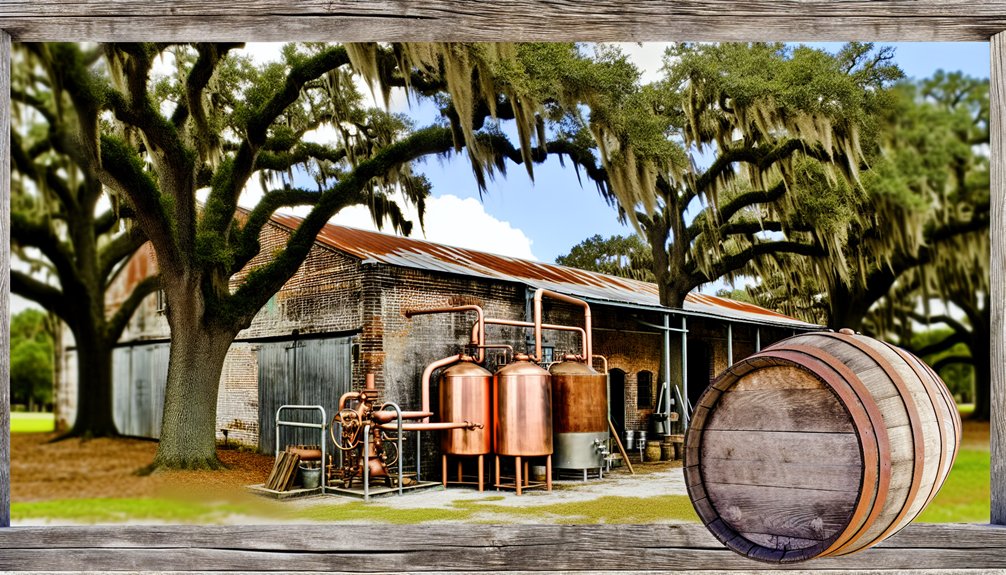
Long before the arrival of European settlers, Native Americans in the region that is now South Carolina were brewing beer from corn and cedar berries. This tradition laid the groundwork for early colonial production, with European immigrants bringing their own brewing techniques. However, commercial scale challenges emerged, as local industries such as wood and sugarcane took precedence. Despite the subtropical climate favoring other crops, brewing still surfaced as a significant industry. By the mid-18th century, breweries in Charleston boasted large copper vessels and other essential equipment for commercial production. Yet, the scale of brewing lagged behind other North American port communities. This early brewing history became the foundation of what we now appreciate as South Carolina's rich beer culture. The first record of brewing in the Carolinas came in 1585 when Sir Walter Raleigh established the Roanoke Colony, a significant milestone in the birth of Carolina brewing.
Prohibitions Impact
While we appreciate South Carolina's rich beer culture, it's important to understand the impact of Prohibition-era laws on its evolution. These laws, initially set to prevent large scale domination, now pose regulatory hurdles for small craft breweries. Strict labeling, taxation, and direct sales limitations are among the challenges. The three-tier system, separating production, distribution, and retail, further restricts small brewers. This system, alongside other legislative challenges, limits market accessibility and competition, leaving the industry dominated by a few large companies. As of 2020, there were over 8,000 craft breweries nationwide, highlighting the need for a more equitable business landscape. Over 8,000 craft breweries clearly show the potential of this industry if outdated laws are revised. Efforts are underway to highlight these negative impacts and seek regulatory change. It's vital we continue supporting for more balanced laws to safeguard the survival and growth of our beloved microbreweries in South Carolina.
Post-Prohibition Resurgence
Despite the constraints that Prohibition-era laws brought to South Carolina's beer landscape, the repeal in 1933 opened a new chapter for the brewing industry. However, it wasn't until 1993, when Palmetto Brewery emerged, that commercial brewing truly returned. Traversing the small brewery challenges of restrictive regulations and rebuilding local brewing traditions, growth initially proved slow. Then came a game changer. The "Pop the Cap" campaign in 2006, and subsequent legislative amendments, expanded consumer preferences, allowing for a wider variety of beers and a more favorable environment for craft breweries. In particular, the 2013 pint law paved the way for a significant increase in the number of breweries, contributing to the overall growth of the industry. As we've worked to refine the industry, we've seen a 1000% increase in breweries since 2013, demonstrating the resilience and adaptability of South Carolina's microbreweries. With the majority of these new breweries opening in metro areas, there has been a noticeable shift towards urban brewing (urban brewing).
Craft Beer Revolution Unleashed
Since the dawn of the "Pop the Cap" campaign, the craft beer revolution in South Carolina has truly come into its own. Regulatory changes, such as the "South Carolina Craft Beer Economic Development Act", have eased burdens, sparking growth in breweries. The industry now significantly contributes to our economy, with an annual contribution of $861 million. With diverse consumer demographics driving demand, breweries have responded with experimental beer offerings, reflecting a spirit of innovation. Industry growth isn't just a result of eased regulations, but a symbol of local preferences for a variety of beer styles and flavors. There are currently a total of 129 breweries in South Carolina, a testament to the rapid growth of this sector in recent years. This craft beer revolution, powered by consumer trends and innovative brewers, is reshaping South Carolina's beer landscape.
Pioneering South Carolina Breweries
As we trace the origins of brewing in South Carolina, it's clear that the state's beer history is as rich and complex as the brews themselves. The pioneering efforts of Palmetto Brewing Co., founded in 1993, and Thomas Creek Brewery, established in 1998, were instrumental in cultivating community ties and prioritizing sustainability. Their innovative brews and relentless passion fueled the growth of the local craft beer scene. Palmetto, known for its Mainstay and 843 series, along with Thomas Creek, a family-owned staple in Greenville, both emerged as pivotal forces in shaping the local brewing landscape. Their dedication to crafting excellent brews and fostering a sense of community has left a lasting legacy, making South Carolina a notable craft beer destination.
Legislative Changes and Growth
Turning our attention to legislative changes and growth, we find that the progression of South Carolina's beer landscape has been considerably influenced by evolving laws and regulations. The regulatory climate shifted dramatically with the 2013 Pint Law, triggering a surge in new breweries. Legislative regulations enacted in 2020 further shaped the industry, introducing restrictions but also increasing the beer sales limit for off-premises consumption. Despite increased regulatory scrutiny, the number of breweries and brewpubs continued to rise, revitalizing local markets. Yet, the reality of enforcement has altered the dynamics at beer festivals. These legislative adaptations have indelibly marked South Carolina's microbrewery history, demonstrating the power of law and regulation in guiding industry growth.
Significance of the 'Pop the Cap' Campaign
As we turn our attention to the pivotal "Pop the Cap" campaign, its origins and outcomes reverberate through South Carolina's brewing history. Initiated by Jamie Tenny and her husband David Merrit in 2005, this campaign aimed to lift the 5% alcohol by weight cap, thereby broadening the diversity of beers that could be brewed. This decisive move not only led to legislative changes but also catalyzed an expansion in the state's beer styles, a transformation we'll explore in the following discussion.
"Pop the Cap" Origins
In 2005, a significant grassroots advocacy group emerged in South Carolina, known as the "Pop the Cap" campaign. Its aim was to lift the restrictive 5% ABW cap on beer that limited consumer choice and stifled local businesses. Campaign stakeholders, led by Jaime Tenny and David Merritt of COAST Brewing Company, rallied support through public education initiatives, events, and direct interactions with legislators. Local breweries, like Palmetto Brewery, joined the crusade, further expanding its reach. The campaign not only sought to increase beer variety but also aimed to boost state tax revenue lost to sales in neighboring states. This grassroots effort represented a key turning point in South Carolina's beer history, paving the way for a thriving microbrewery landscape.
Legislative Impact & Outcome
The successful "Pop the Cap" campaign laid the groundwork for a series of legislative changes that fundamentally reshaped South Carolina's beer landscape. Paramount among these were the 2007 and 2010 legislations that raised alcohol limits and permitted retail sales expansion. These laws catalyzed the industry's growth, enhancing the consumer experience and increasing the economic contribution of craft breweries to a whopping $650 million, providing over 4,000 jobs in 2016. The 2013 "Pint Law" further bolstered on-premise sales, enabling breweries to operate their own taprooms. Subsequent legislation allowed food sales, refining the taproom experience. The anticipated South Carolina Craft Beer Economic Development Act promises to heighten the sector's competitive advantages, ensuring a vibrant future for our thriving microbreweries.
Brewing Diversity Expansion
Drawing inspiration from North Carolina's successful campaign, we, in South Carolina, launched our own grassroots 'Pop the Cap' effort, led by a dedicated group of craft beer enthusiasts and key supporters. The initiative resulted in an increased variety of brews, with the ABV limit being lifted to allow for a wider range of beer styles. This expansion in brewing diversity served as cultural immersion, exposing our community to nearly one-third of the world's beer styles previously unavailable here. We saw a surge in local breweries, each contributing to our state's economic growth and competitiveness. Breweries began focusing on customer experience, leading to a revitalization of smaller markets. Our campaign facilitated community building, while changing perceptions of craft beer.
Impact of the 'Pint Law' and 'Stone Bill'
Now, let's turn our attention to the significant impacts of the 'Pint Law' and the 'Stone Bill' on South Carolina's microbrewery landscape. These landmark pieces of legislation revolutionized the industry, providing critical opportunities for growth and innovation. The economic implications have been profound, with each bill contributing substantially to job creation and the state's overall economy.
"Pint Law" Revolution
How did South Carolina's beer industry experience a revolutionary transformation? It began with the passing of the 'Pint Law' in 2013. This law enabled breweries to sell up to 48 ounces of beer for on-site consumption, consequently enhancing taproom experiences. Prior restrictions had limited creativity, but this change ignited a wave of consumer-driven innovations. The law's enactment, in turn, encouraged a surge in brewery openings, rejuvenating older industrial areas while boosting the economy by $13.7 million. Breweries began to adapt, offering balanced experiences including food and activities, not just beer. The 'Pint Law' revolution, as a result, not only transformed the industry but also contributed to creating vibrant community spaces, underscoring the importance of local hospitality.
"Stone Bill" Innovations
While the 'Pint Law' had already marked a significant milestone in South Carolina's beer industry, the introduction of the 'Stone Bill' in 2014 further revolutionized craft brewing operations in the state. This new legislation allowed breweries to produce unlimited amounts of beer, operate on-site restaurants, and even sell wines and beers from other manufacturers. This broadened the scope of taproom operations and facilitated culinary partnerships, enhancing the overall customer experience. However, breweries were required to meet additional licensing and regulatory requirements, ensuring safety and compliance. This bill changed the landscape of South Carolina's beer industry, making the state a more extensive and inclusive brewery experience for consumers.
Economic Growth Post-Legislation
The passage of the 'Pint Law' and 'Stone Bill' ignited a significant economic boom in South Carolina's craft beer industry. These laws paved the way for 12 new breweries, boosting the industry's economic impact to $13.7 million and creating nearly 140 jobs. This growth demonstrated our state's economic resilience. The overall impact of craft beer escalated by 5%, contributing $254 million and 3,000 jobs to the state's economy. Through community partnerships, breweries have also enhanced local philanthropy, event sponsorship, and volunteerism. The industry's expansion promotes safety by filling vacant industrial spaces with vibrant businesses. Ultimately, the legislation amplified job creation, increased revenues, and spurred local investment, underscoring the craft beer industry's crucial role in South Carolina's thriving economy.
Present-day Brewery Landscape
In an effervescent swirl of innovation and tradition, South Carolina's present-day brewery landscape continues to evolve and expand. Breweries like Peak Drift and Sierra Nevada's Mills River Brewery champion sustainability efforts, utilizing innovative brewing techniques and eco-conscious equipment. Embracing the richness of local resources, breweries highlight local ingredients, enhancing the uniqueness of their brews. Additionally, by fostering community partnerships, breweries like Magnetic South and Yee-Haw create engaging, family-friendly environments. New breweries continue to burgeon, adding to the anticipation and growth of the craft beer scene. The state's breweries are not only expanding their market presence locally, but they're also earning national recognition, demonstrating the importance and promise of South Carolina's brewing industry.
Key Industry Trends
Traversing through South Carolina's brewing industry, we've seen a craft beer revolution unfurl. Key industry trends speak to significant growth and innovation. Progressive legislative changes have nurtured the industry's evolution, enabling direct sales to customers and facilitating market expansion via diverse distribution channels. An impressive 150% growth rate since 2013 attests to the dynamism of this sector. Small businesses, empowered by distribution services like Low Country Craft Distribution, have thrived. Pandemic-era distribution growth underscored the industry's resilience, with mobile canning lines offering innovative solutions. Investments and expansions by larger companies signal confidence in the sector's future. Safeguarding this trajectory requires continued commitment to safety, consumer education, and strategic partnerships. South Carolina's craft beer industry demonstrates a potent blend of tradition, innovation, and economic importance.
Future of South Carolina Breweries
As we turn our attention to the future of South Carolina breweries, we see a landscape ripe with emerging market opportunities and innovative strategies. The incoming wave of substantial investment, job creation, and market expansion indicates a promising horizon for the craft brewing industry. Together, let's explore how strategic partnerships and evolution in consumer experiences are shaping the future trajectory of this vibrant sector.
Emerging Market Opportunities
While some industries may have seen a decline in recent years, South Carolina's craft brewery industry continues to boom, expanding by more than 1000% since the 2013 "pint law" came into effect. We've seen new breweries revitalizing secondary markets, and key counties like Greenville, Charleston, and Richland experiencing a surge in brewery establishments. The projected market size of $121 million by 2025, alongside an annualized growth rate, signals promising e-commerce opportunities. Additionally, the industry's contribution to job creation and local economies is remarkable. The growth has also sparked tourism partnerships, enhancing beer tourism and boosting local businesses. With regulatory support and room for growth in untapped markets, the future indeed seems promising for South Carolina's craft breweries.
Innovative Brewery Strategies
In the dynamic world of craft brewing, we find South Carolina breweries embracing innovative strategies to secure their future. Breweries like Peak Drift and Columbia Craft are forming strategic partnerships, creating parent companies like Craft Brew Inc. to leverage resources and broaden distribution. Simultaneously, they're engaging with communities, hosting events, and using social media marketing to amplify their reach. They're diversifying their offerings, adding hard seltzers and non-alcoholic options, while innovating operations with new technologies for quality and freshness. They're also focusing on efficiency and scalability through automation. In this evolving landscape, South Carolina breweries are not just surviving; they're thriving, thanks to their innovative strategies and a focus on brand collaborations.